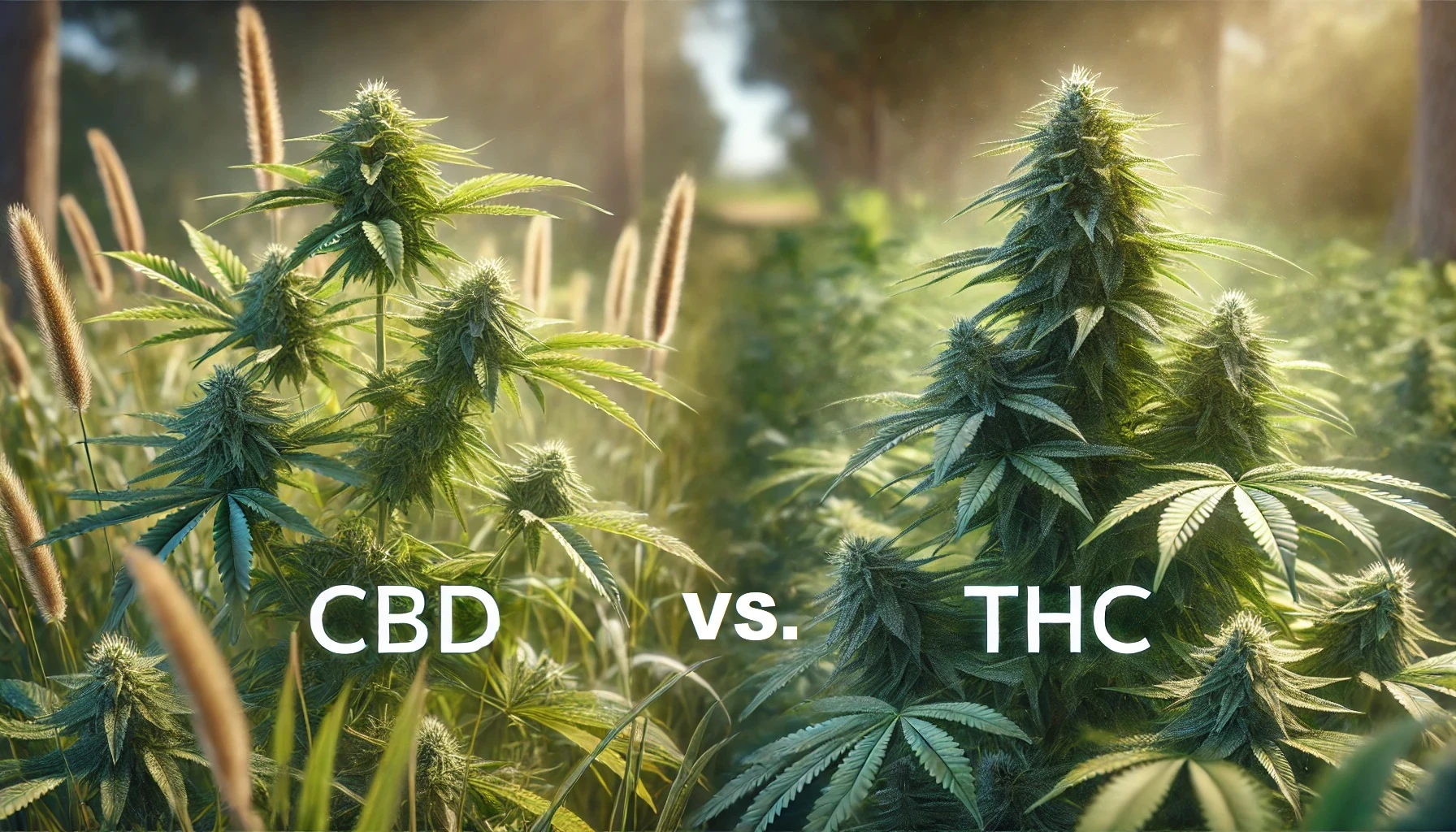
THC and CBD are two of the most recognized cannabinoids found in cannabis. However, they are not the same. THC, or tetrahydrocannabinol, is primarily responsible for the intoxicating “high” associated with cannabis, while CBD, or cannabidiol, does not produce the same intoxicating effect. Both can appear in cannabis products, either separately or together.
At Puff Cannabis Dispensary, understanding the difference between THC and CBD can make choosing a cannabis product much easier. Therefore, this guide explains how the two cannabinoids differ, what to look for on product labels, how product formats can affect the experience, and how to compare THC, CBD, and balanced products.
Quick Answer: What Is the Difference Between THC and CBD?
The biggest difference is how they affect the mind and body.
| THC | CBD |
|---|---|
| Produces intoxicating effects | Does not produce the same intoxicating effect |
| Commonly associated with the cannabis “high” | Generally not associated with a cannabis high |
| Can cause impairment | Does not cause the same type of impairment associated with THC |
| Found in flower, vapes, edibles, concentrates and more | Found in flower, oils, tinctures, capsules, edibles and more |
| Potency is often expressed as a percentage or amount | Potency is often expressed as a percentage or amount |
In simple terms, THC is the cannabinoid most associated with intoxication, while CBD is non-intoxicating. However, both can influence the body and brain, and individual responses can vary.
What Is THC?
THC stands for delta-9-tetrahydrocannabinol. It is the cannabinoid most commonly associated with cannabis intoxication.
When consumed, THC can produce effects such as a feeling of being high, altered perception, and impaired attention or coordination. Because of this, THC content is one of the most important factors to consider when comparing cannabis products.
THC can be found in many cannabis formats, including:
- Flower
- Pre-rolls
- Vapes
- Concentrates
- Edibles
- Tinctures
- Capsules
The amount of THC can vary substantially between products. As a result, two products that look similar may produce very different experiences.
What Is CBD?
CBD stands for cannabidiol. Unlike THC, CBD does not produce the same intoxicating high.
That distinction makes CBD an important cannabinoid for consumers who want to explore cannabis products without the intoxicating effects associated with THC. Nevertheless, CBD can still affect the body and brain, so it should not be treated as completely inactive.
CBD is available in a variety of product formats, including oils, tinctures, capsules, edibles, flower, and other formulations.
THC vs. CBD: How Do They Compare?
The easiest way to understand the difference is to compare their primary characteristics.
| Category | THC | CBD |
|---|---|---|
| Full Name | Delta-9-tetrahydrocannabinol | Cannabidiol |
| Intoxicating | Yes | No |
| Produces a “High” | Yes | No |
| Commonly Found In Cannabis | Yes | Yes |
| Available in Edibles | Yes | Yes |
| Available in Vapes | Yes | Yes |
| Available in Tinctures | Yes | Yes |
| May Appear Together | Yes | Yes |
However, this table should not be interpreted as meaning that THC and CBD are interchangeable. Their effects and properties differ, and the formulation of the product also matters.
Does CBD Get You High?
No. CBD does not produce the same intoxicating high associated with THC. However, CBD can still have effects on the brain and body.
Therefore, customers who want to avoid intoxication often look for products that contain CBD without meaningful amounts of THC.
Still, always read the label carefully because some CBD products contain both CBD and THC.
Does THC Get You High?
Yes. THC is the cannabinoid primarily responsible for the intoxicating effects of cannabis.
For that reason, consumers should pay close attention to THC concentration and serving information, particularly when trying a new product or format.
THC can also impair attention, coordination, and reaction time. Consequently, consumers should avoid driving or operating equipment after using intoxicating cannabis products.
Can THC and CBD Be Used Together?
Yes. Cannabis products can contain mostly THC, mostly CBD, or a combination of both. In addition, products can contain other cannabinoids and terpenes that contribute to their overall composition.
Some consumers specifically seek balanced THC-to-CBD formulations because they want a product containing both cannabinoids.
However, the presence of CBD does not eliminate the intoxicating effects of THC. The amount and ratio of each cannabinoid still matter.
What Is a THC-to-CBD Ratio?
A THC-to-CBD ratio describes how much THC and CBD are present in a product.
For example:
| Ratio | General Composition |
|---|---|
| 1:1 | Similar amounts of THC and CBD |
| 2:1 | More THC than CBD |
| 1:2 | More CBD than THC |
| 4:1 | Significantly more THC than CBD |
| 1:4 | Significantly more CBD than THC |
Therefore, checking the ratio can help consumers understand whether a product is THC-dominant, CBD-dominant, or relatively balanced.
Keep in mind that the actual amount per serving is just as important as the ratio.
Is Higher THC Better?
Not necessarily.
A higher THC percentage does not automatically mean a cannabis product is better. Instead, the ideal potency depends on the consumer, product format, experience level, and individual response.
Higher THC exposure is also associated with a greater risk of certain adverse effects. For that reason, consumers should consider potency alongside serving size, product format, and overall cannabinoid content rather than using THC percentage as the only measure of quality.
How Should Beginners Compare THC and CBD?
If you are new to cannabis, start by learning how THC and CBD differ before selecting a product.
First, determine whether you are comfortable with intoxicating effects.
Next, review the amount of THC and CBD listed on the label.
Then, consider the product format, serving size, and expected onset.
Finally, follow the manufacturer’s instructions and pay attention to how the product affects you.
In particular, measured products can make it easier to understand how much cannabinoid is contained in each serving.
THC vs. CBD in Edibles
Edibles can contain THC, CBD, or both.
However, edible products can behave differently from inhaled cannabis because the cannabinoids are processed differently by the body.
Edibles generally take longer to produce noticeable effects and can last longer than inhaled products. Therefore, consumers should read serving information carefully and avoid assuming that the effects will occur immediately.
The label may show:
- Total THC
- Total CBD
- THC per serving
- CBD per serving
- Number of servings
- Ingredients
- Recommended serving information
As a result, reading the complete label can help you compare edible products more accurately.
THC vs. CBD in Vapes
Vape products can also contain THC, CBD, or both.
THC vape products are commonly chosen by consumers seeking the intoxicating effects of THC, while CBD-dominant vape products are generally selected by people looking for a non-intoxicating cannabinoid option.
Because vaping usually produces effects more quickly than consuming an edible, the product format should be considered along with cannabinoid content.
Additionally, vape products can contain different formulations, including distillate, live resin, live rosin, and other extracts.
THC vs. CBD in Flower
Cannabis flower naturally contains multiple cannabinoids and terpenes.
Some flower products are THC-dominant, while others may have higher CBD concentrations.
Therefore, do not choose flower based solely on its name or strain label. Instead, review the current cannabinoid and potency information provided with the product.
The terpene profile may also provide useful information about the product’s aroma and flavor characteristics.
What Are Other Cannabinoids?
THC and CBD receive most of the attention, but cannabis contains many other cannabinoids.
Depending on the product, you may also encounter:
- CBG
- CBN
- CBC
- THCV
Research into these cannabinoids is continuing, and their effects are not as well understood as those of THC and CBD. Therefore, consumers should avoid assuming that every cannabinoid produces the same type of experience.
Why Do Cannabis Products Have Different Effects?
Cannabis experiences can vary from one person to another.
For example, effects can depend on:
- THC and CBD content
- Product format
- Serving size
- Individual tolerance
- Frequency of use
- Other cannabinoids
- Terpene profile
- Individual factors
As a result, the same product may not feel exactly the same for every consumer. Health Canada also notes that individual responses can vary depending on factors such as experience, frequency of use, THC and CBD content, and other substances or health products.
How to Read THC and CBD on a Cannabis Label
Before purchasing a cannabis product, review the label carefully.
THC Amount
Look for the total amount or concentration of THC.
CBD Amount
Check the total CBD amount or concentration.
Serving Size
For edibles, tinctures, capsules, and other measured products, review the amount per serving.
Total Product Amount
This tells you how much product is contained in the package.
Ingredients
Ingredients are particularly important for edibles and formulated products.
Other Cannabinoids
Some products may list CBG, CBN, THCV, or other cannabinoids.
Ultimately, understanding the label allows you to compare products more accurately rather than relying only on marketing language.
Which Is Better: THC or CBD?
There is no universal answer.
Instead, the better choice depends on what you are looking for and whether you want an intoxicating or non-intoxicating cannabinoid.
Consider THC when you are specifically looking for products containing an intoxicating cannabinoid.
Consider CBD when you prefer a cannabinoid that does not produce the same intoxicating effect as THC.
Consider a balanced product when you want both cannabinoids in the same formulation.
Most importantly, compare the actual cannabinoid amounts rather than relying only on product names or broad categories.
Is CBD Safer Than THC?
It is not accurate to assume that CBD is completely risk-free simply because it does not cause a high.
CBD can still affect the body and brain, and research continues into its safety, interactions, and potential uses. For that reason, customers should approach CBD products with the same attention to labeling and product information used for other cannabis products.
Anyone with health concerns, who takes medications, or who is considering cannabis for a medical purpose should consult an appropriate healthcare professional.
THC vs. CBD for Discreet Cannabis Shopping
For customers who value privacy, cannabinoid choice is only part of the experience.
Equally important, product packaging, order handling, communication, and delivery can influence discretion.
At Puff Cannabis Dispensary, we place strong emphasis on privacy-conscious fulfillment. Orders are handled using plain, non-descriptive packaging and odor-conscious packaging practices, while unnecessary product information is not prominently displayed on the outside of the package.
As a result, customers can enjoy a more discreet shopping and delivery experience.
Frequently Asked Questions
What is the main difference between THC and CBD?
THC is the cannabinoid primarily responsible for cannabis intoxication, while CBD does not produce the same intoxicating high. However, both can affect the body and brain.
Does CBD get you high?
No. CBD does not produce the same intoxicating high associated with THC. Nevertheless, CBD can still have effects on the body and brain.
Does THC get you high?
Yes. THC is the cannabinoid primarily associated with the intoxicating effects of cannabis.
Can a product contain both THC and CBD?
Yes. Cannabis products can contain primarily THC, primarily CBD, or a combination of both.
Which is better, THC or CBD?
Neither is universally better. Instead, the choice depends on the product, cannabinoid profile, consumer preferences, and whether intoxicating effects are desired.
Is higher THC always better?
No. In fact, higher THC does not automatically mean better quality or a better experience. Potency should be considered alongside the product format, serving size, and individual response.
Can beginners use THC products?
Beginners should first understand THC potency, serving information, product format, and the possibility of intoxication. Therefore, reading the product label and following manufacturer guidance is important.
What does a 1:1 THC-to-CBD ratio mean?
A 1:1 ratio generally means the product contains similar amounts of THC and CBD. However, the actual amount per serving still matters.
Do cannabis products contain cannabinoids other than THC and CBD?
Yes. Some products contain cannabinoids such as CBG, CBN, CBC, and THCV. However, these cannabinoids are less well understood than THC and CBD.
Does Puff Cannabis Dispensary offer discreet cannabis products and delivery?
Puff focuses on a discreet customer experience, including privacy-conscious order handling, plain non-descriptive packaging, odor-conscious packaging practices, and discreet delivery communications where reasonably practical.
THC vs. CBD: The Bottom Line
THC and CBD are both important cannabinoids, but they offer distinctly different characteristics.
THC is primarily associated with cannabis intoxication, while CBD does not produce the same intoxicating high. Products can contain either cannabinoid separately or combine both in different ratios.
Therefore, choosing between THC and CBD should start with understanding what each cannabinoid is, how much is present in the product, and which format best matches your preferences.
At Puff Cannabis Dispensary, we make it easier to compare cannabis products while maintaining a strong focus on quality, convenience, education, and discretion.
Know the difference. Read the label. Choose with confidence.